The ground resistance is also measured, but the scene is different and the on-site conditions are also completely different. Building lightning protection grounding can install auxiliary grounding rods on flat ground. Precision equipment rooms require highly accurate data. Field towers may be surrounded by cement or gravel. There are many downlinks in multi-point parallel grounding systems that do not need to be disconnected one by one. Outdoor construction sites are exposed to harsh wind and sun conditions. Using one method and one device to deal with all scenarios often ends up focusing on one and losing sight of the other. The EM‑series digital ground resistance testers offer multiple measurement solutions including two‑wire, three‑wire, four‑wire and dual‑clamp methods to meet measurement requirements for diverse scenarios.

Figure 1 - EM3040 On-Site Ground Resistance Measurement
ⅠBuilding Lightning‑Protection Ground — Conventional Measurement by Three‑Wire Method
The building grounding grid is usually laid out regularly, and the surrounding ground conditions are suitable for driving in auxiliary grounding rods. The three-wire method can meet the conventional accuracy requirements. Starting from the ground body under test, bury the P and C auxiliary ground rods deeply into the earth in a straight line every 5 to 10 meters. The test wires cannot be entangled together. When encountering dry or gravelly ground, add water to keep the area where the auxiliary grounding rod is inserted moist in order to reduce the auxiliary grounding resistance. Models such as the EM3100C and EM3000B all support three-wire measurements.
Model Recommended | Accuracy | Auxiliary Ground Rods | Application Scenarios |
EM3100C | ±2%rdg | 2 pieces | Outdoor locations, IP65 protection, lithium battery power supply, suitable for routine ground resistance measurement |
EM3000B | ±2%rdg | 2 pieces | Routine measurement, USB data upload, compatible with four-wire method upgrade |
ⅡPrecision‑Equipment and Data Centers — High‑Accuracy Measurement by Four‑Wire Method
Facilities such as data centers and laboratories have high precision requirements for ground resistance measurements, and the standard three-wire method cannot eliminate errors caused by contact resistance and wire resistance. The four‑wire method employs four test leads: E, ES, P(S) and C(H). It can eliminate the influence of contact resistance on measurement, which exists between the ground electrode under test, auxiliary ground rods, test clamps and the surfaces of the instrument input interfaces. No lead‑resistance calibration is required. The distance between the grounding electrode under test and the current electrode should be at least five times the burial depth of the grounding electrode under test. Both the EM3100C and EM3000B support precision measurements using the four-wire method, with an accuracy of ±2% of reading.
Model Recommended | Measurement Method | Lead Resistance Calibration | Accuracy | Application Scenarios |
EM3100C | Four-wire Method | Not required | ±2%rdg | Precision measurement, acceptance testing |
EM3000B | Four-wire Method | Not required | ±2%rdg | Precision measurement, laboratory use |
Ⅲ Sites Where Ground Rods Cannot Be Driven — Simplified Measurement by Two‑Wire Method
In situations where it is not possible to drive auxiliary grounding rods into concrete floors, indoor floors, gravel surfaces, and the like, neither the three-wire method nor the four-wire method can be implemented. The two-wire method does not use an auxiliary grounding rod; instead, it utilizes the common ground of metal water pipes, fire hydrants, or the commercial power system as an auxiliary grounding electrode, allowing measurements to be taken using only two test leads. The meter reading represents the sum of the resistance values of the ground electrode under test and the auxiliary ground electrode; to obtain the actual value, subtract the resistance value of the auxiliary ground electrode. When taking measurements, prioritize selecting an auxiliary ground electrode with a lower ground resistance value. Models such as the EM3040 and EM3100 all support the two-wire measurement method.
Model Recommended | Source of Auxiliary Ground Electrode | Operation Key Points | Application Scenarios |
EM3040 | Metal water pipes, fire hydrants, commercial grounding | Remove oxide layer at the connection point of auxiliary ground electrode | Indoor sites, cement ground, occasions where ground rods cannot be driven |
EM3100 | Metal water pipes, fire hydrants, commercial grounding | Confirm ground voltage below 10V | Portable outdoor use, IP65 protection, lithium battery power supply |
Ⅳ Multi‑Point Parallel Grounding System — Dual‑Clamp Method / Selective Method
Systems such as pole towers and large ground grids have multiple grounding down conductors connected in parallel. The traditional method requires disconnecting the parallel ground poles and measuring them one by one, which is a heavy workload. The dual-clamp method generates an AC electromotive force through the excitation clamp and detects the feedback current via the measurement clamp, allowing for direct measurement without disconnecting any parallel grounding electrodes. The EM3200C Dual-Clamp Multifunction Ground Resistance Tester is equipped with large-diameter current clamps, enabling flexible measurement of various complex grounding systems, including single-point and mesh grounding.
Model Recommended | Measurement Method | Operation Key Points | Application Scenarios |
EM3200C | Dual-clamp Method / Selective Method / 2/3/4-wire Method | No need to disconnect parallel ground electrodes for direct measurement | Transmission towers, large grounding grids, complex parallel grounding systems |
Ⅴ Outdoor Construction Sites — Portable and Durable Equipment
The outdoor construction site environment is harsh, exposed to wind, sun and rain, which places higher requirements on the protective performance and battery life of the instrument. The ETCR3100 series adopts a waterproof protective box with a protection level of IP65, which is anti-collision, anti-fall, and waterproof. It is equipped with a large-capacity rechargeable lithium battery pack and is suitable for long-term outdoor operations. The instrument supports lead‑resistance calibration function, which can avoid errors caused by lead‑resistance drift after long‑term use of test leads or poor contact at interfaces, ensuring on‑site measurement accuracy.
Model Recommended | Protection Level | Power Supply | Application Scenarios |
EM3100 | IP65 | Rechargeable lithium battery | Outdoor construction sites, waterproof and drop-resistant, supports line resistance calibration and Bluetooth transmission |
EM3040B | Standard | Dry batteries | Lightweight basic model, supports 2/3/4-wire method and soil resistivity measurement |
VI On-Site Measurement Photos
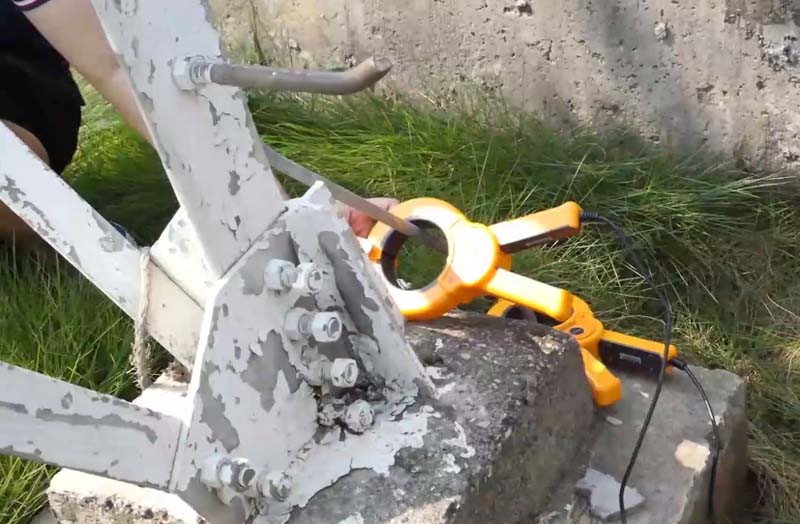
Figure 2 - EM3200C Dual-Clamp Method for Measuring Ground Resistance
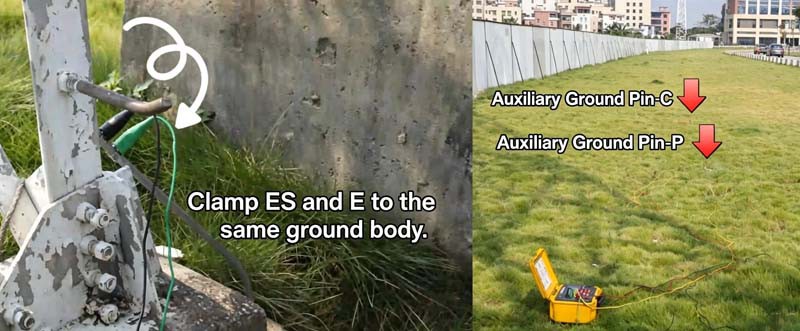
Figure 3—EM3200C Four-Wire Method for Measuring Ground Resistance
Ⅶ Summary
There is no universal all‑purpose solution for on‑site ground resistance measurement. For building lightning protection grounding, choose the three-wire method for routine measurement. For precision equipment and data centers, give priority to the four-wire method. When it is impossible to drive ground piles, use the two-wire method to flexibly deal with it. For multi-point parallel grounding systems, use the double-clamp method without unbuckling. For outdoor construction sites, use portable and durable protection models. The EM‑series digital ground resistance testers cover all the above‑mentioned solutions. Users may select suitable equipment and measurement methods according to their actual site conditions.
Guangdong ETCR Measurement & Control Technology Co., Ltd. specializes in the R&D and manufacturing of power testing instruments and power quality management equipment, and is the manufacturer of Digital Ground Resistance Tester including EM3100C, EM3000B and EM3200C.
With nearly 20 years of deep cultivation in the power industry, the company adheres to independent R&D and technological innovation. It devotes great care to developing every product and providing thoughtful service to every customer. We provide flexible OEM & ODM customization services, delivering tailor-made solutions based on clients’ specific demands to create greater value for partners.
ETCRMETER is a high-end brand of ETCR. All products are manufactured by ETCR, which also provides technical support and after-sales service.
For more information, please visit the Yidian Measurement & Control official website: www.etcrmeter.com


 10th Floor, Block 5, Liandong Intelligent Manufacture Park, No. 105, Shilong North Road, Nanhai District, Foshan City, Guangdong, China


